
 Protective clothing to wear when spraying pesticides
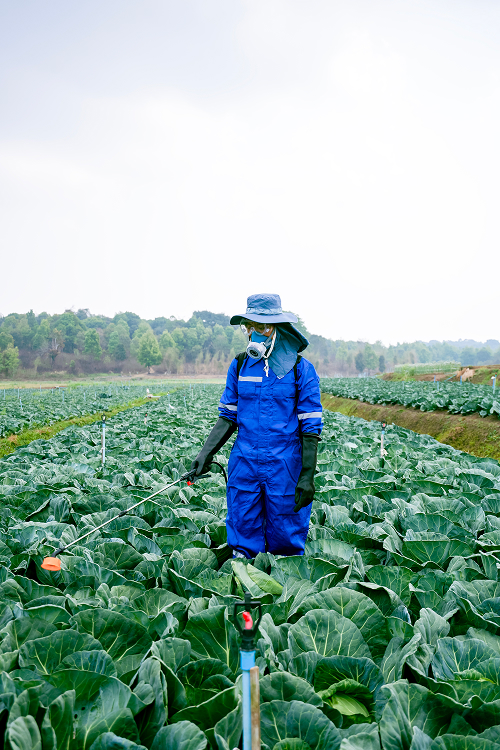
1. Wear protective clothing when mixing and spraying pesticides to prevent skin contact.
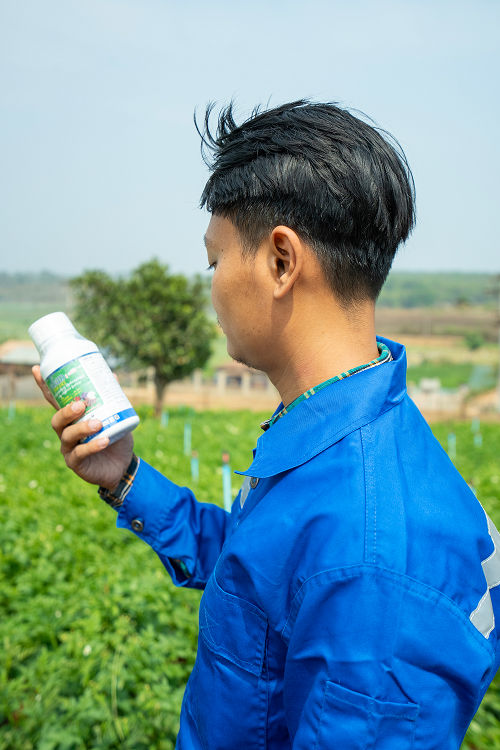
2. Sometimes, pesticide labels specifically state the use of personal protective equipment.
3. Even if not stated otherwise, wear long-sleeved shirts and long pants that cover your arms and legs. Wear a wide-brimmed hat to protect your head and neck from the pesticide. Wear gloves and eye protection. Some pesticides recommend using a respirator to prevent inhalation of pesticide fumes.
 Things to keep in mind when mixing pesticides
1. When mixing pesticides, follow the recommended concentration.
2. Using more than the recommended concentration is not beneficial. Using less than the recommended concentration may result in less effectiveness.
3. Powder and liquid insecticides can be applied by using a powder sprayer, a sprayer, or by hand (wearing gloves) for small areas.
4. When spraying pesticides, farmers often mix them with dirty water from nearby drains, which can reduce the effectiveness of the pesticides and make them ineffective. Therefore, only clean, clear water should be used for spraying.
5. Water-soluble liquids can be measured by using appropriate measuring equipment, then mixed with water in a sprayer tank for application.
6. Water Soluble Powder should not be mixed directly into the spray bottle. First, mix the product with a small amount of water and pour it into the spray bottle.
7. Then, add the specified amount of water and mix until smooth.
8. Do not fill the sprayer to overflowing with water. Do not mix more than the daily recommended amount.
9. Wear protective clothing when mixing pesticides. Use appropriate equipment. Never mix by hand.
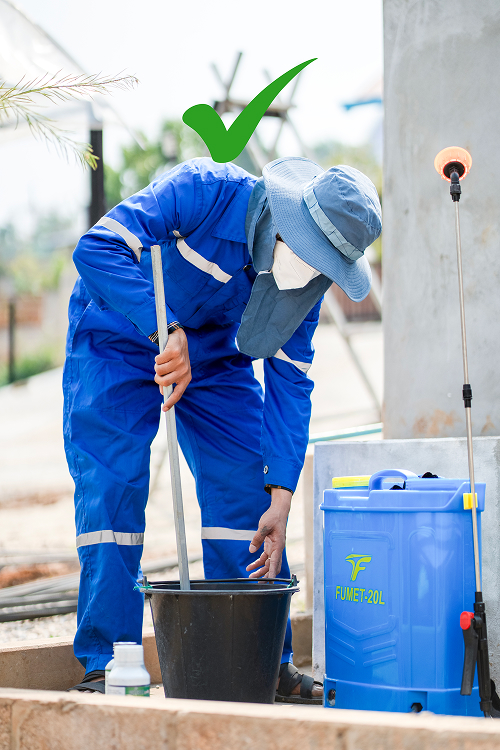
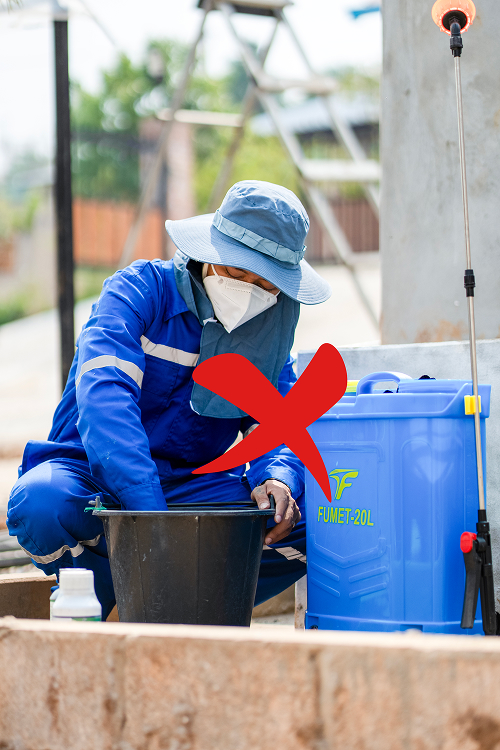
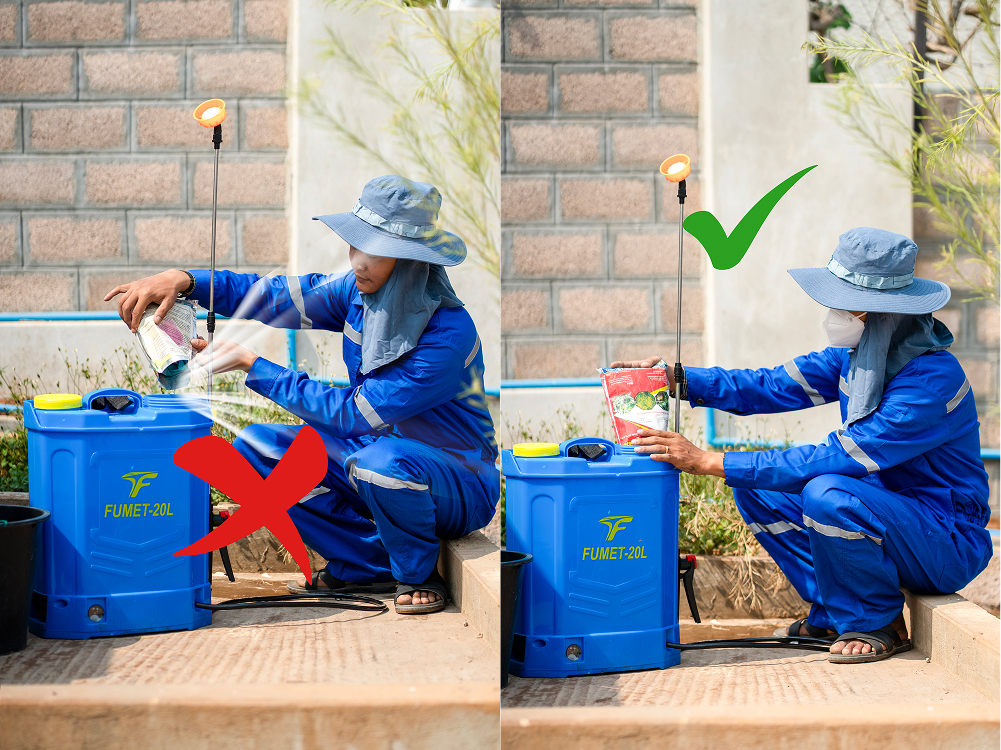
10. When handling the powder and water-soluble powder, be careful not to scatter the powder. If you open the water-soluble powder bag, open it with the opening side closest to the water.
11. Leaving the powder bag open in the air can cause the powder to be blown away by the wind, which can be dangerous to people.
Things to keep in mind when spraying pesticides1. Do not allow untrained people to spray pesticides.
2. When spraying pesticides, wear protective clothing to prevent skin contact with pesticides.
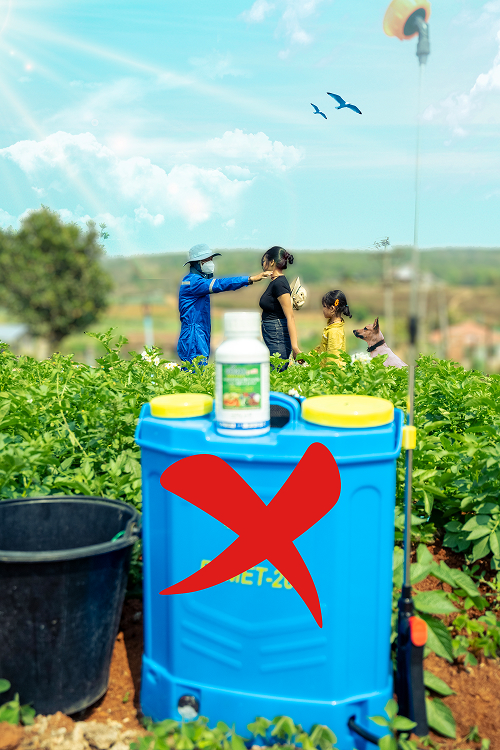
3. Do not allow bystanders, children, or animals to enter the area where pesticides are being sprayed.
4. Before starting to spray, check the parts of the spraying equipment to be used to ensure that they are in good condition.
5. Do not use defective or contaminated sprayers.
6. Wash the outside of the sprayer after each refill.
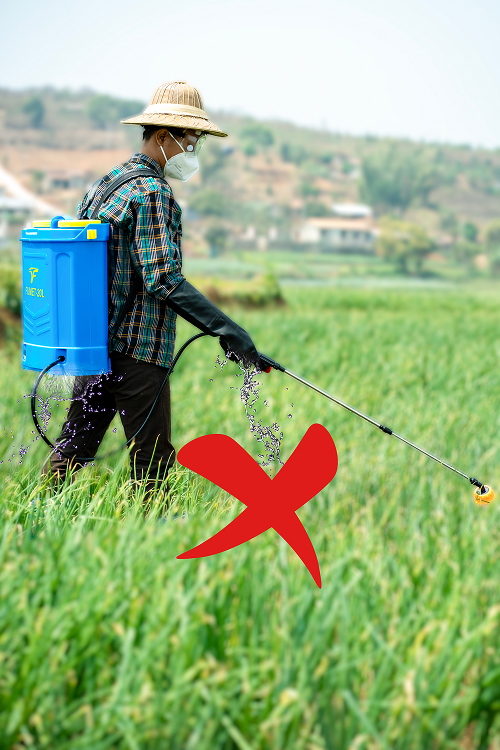
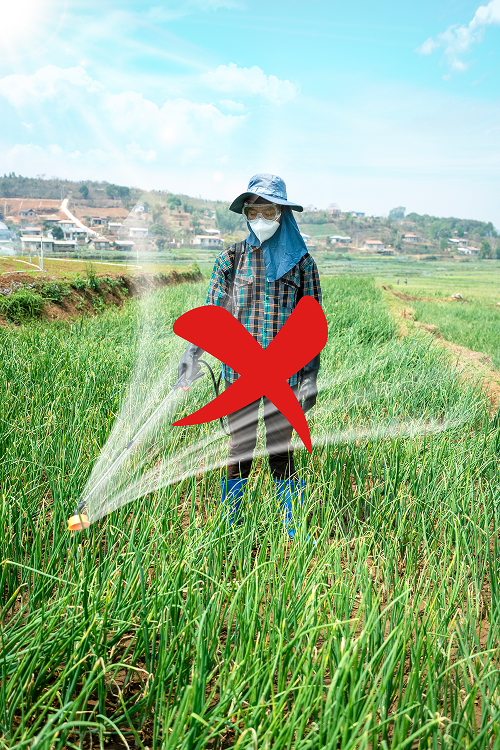
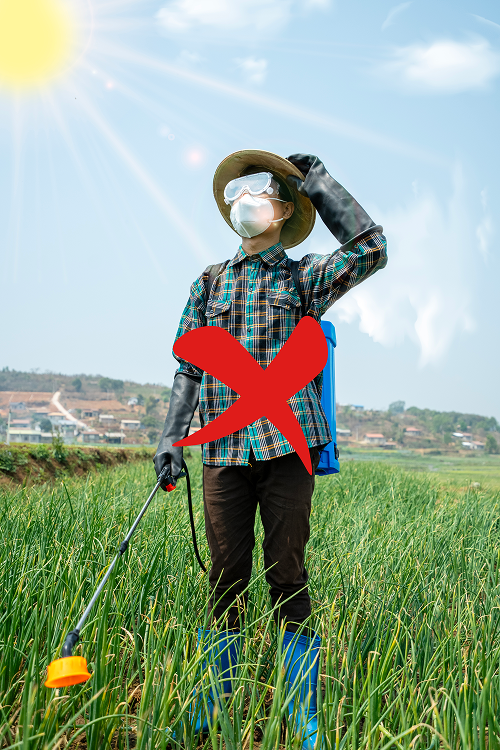
7. Do not spray pesticides under the wind. Do not spray when the wind is strong. The spray may not reach the desired area due to strong winds.
8. Spray during cool weather (early morning/late evening). Spray between 6 am and 9 am or between 4 pm and 6 pm when the temperature is low and the wind is calm. Do not spray when the sun is too hot. This is because when the sun is too hot and the temperature is high, the pores become larger, allowing the pesticides to enter the body more easily.
9. The walking speed in the field is (3) feet per second, and in the fields, walk at a regular rate of (1.5) feet per second.
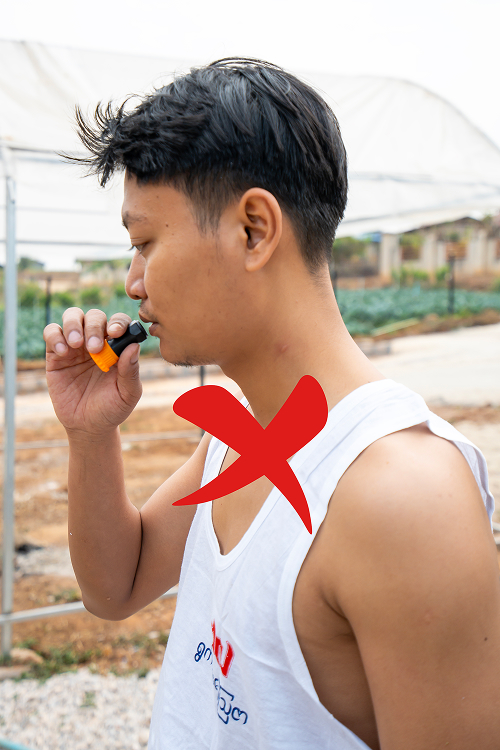
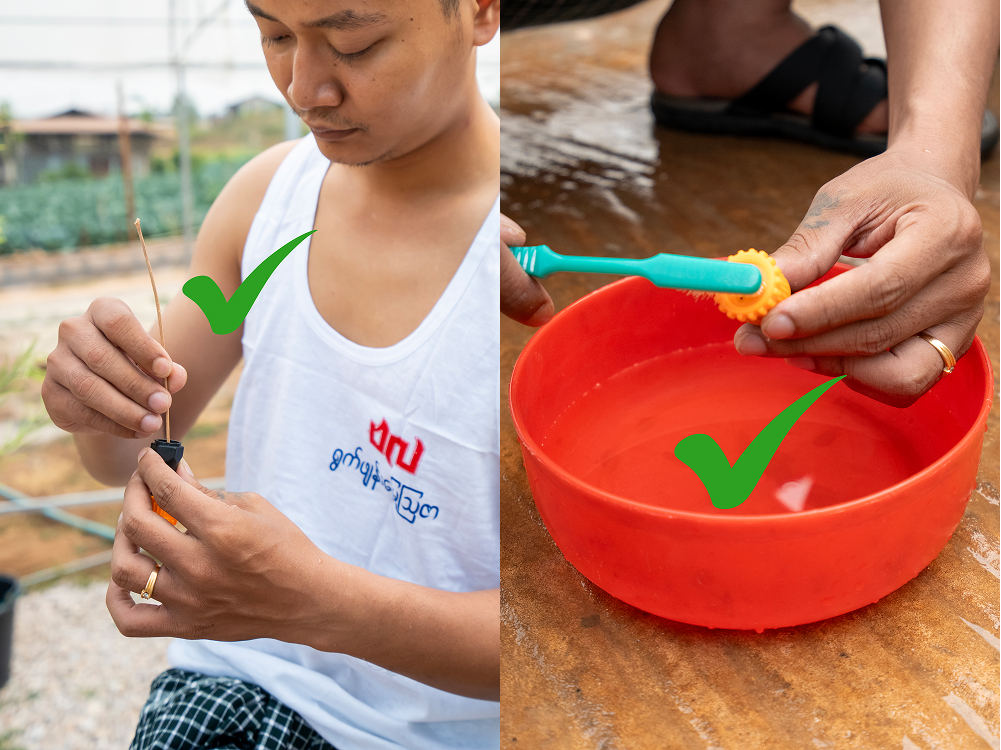
10. Do not blow a blocked pesticide nozzle with your mouth. Use a small object to open it and rinse it with water.
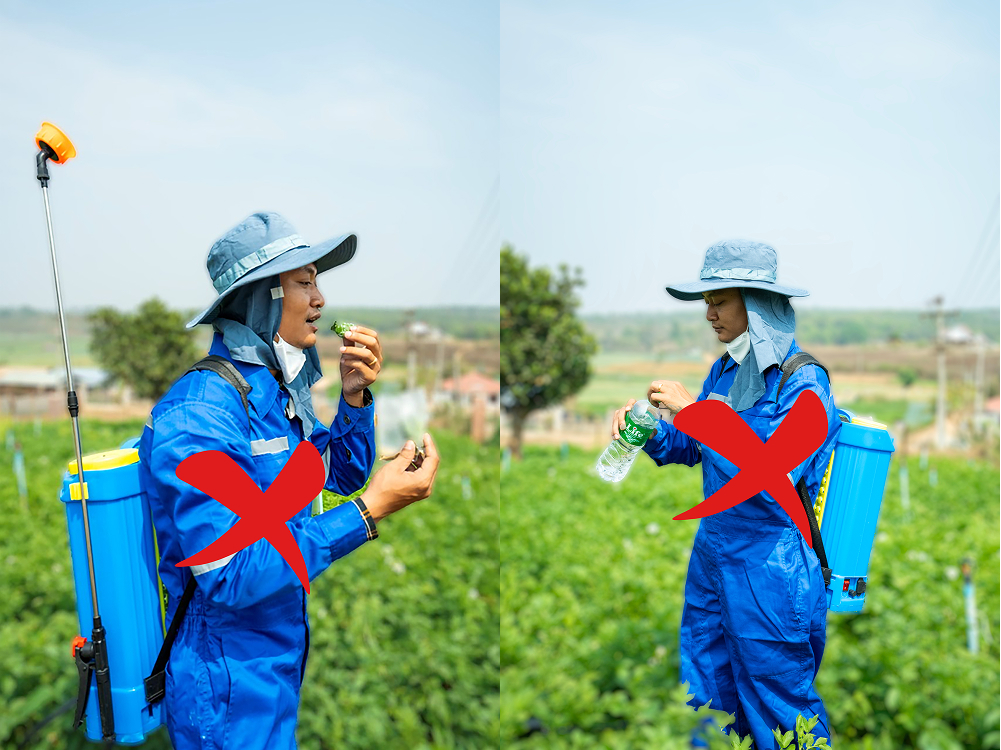
11. Do not eat, drink or smoke while handling pesticides.
12. Do not re-enter the field until 24 hours after spraying. Do not re-enter the field or harvest crops until the minimum time specified in the pesticide label has elapsed.
13. Do not mix more than the recommended daily dose. Only mix more if the prescription states that the remaining dose can be used on subsequent days.
14. Inspect and clean the spray equipment after each day’s use.
15. Do not throw away excess chemicals or cleaning water in lakes, streams, or on the road. Pour the cleaning water into a bucket.
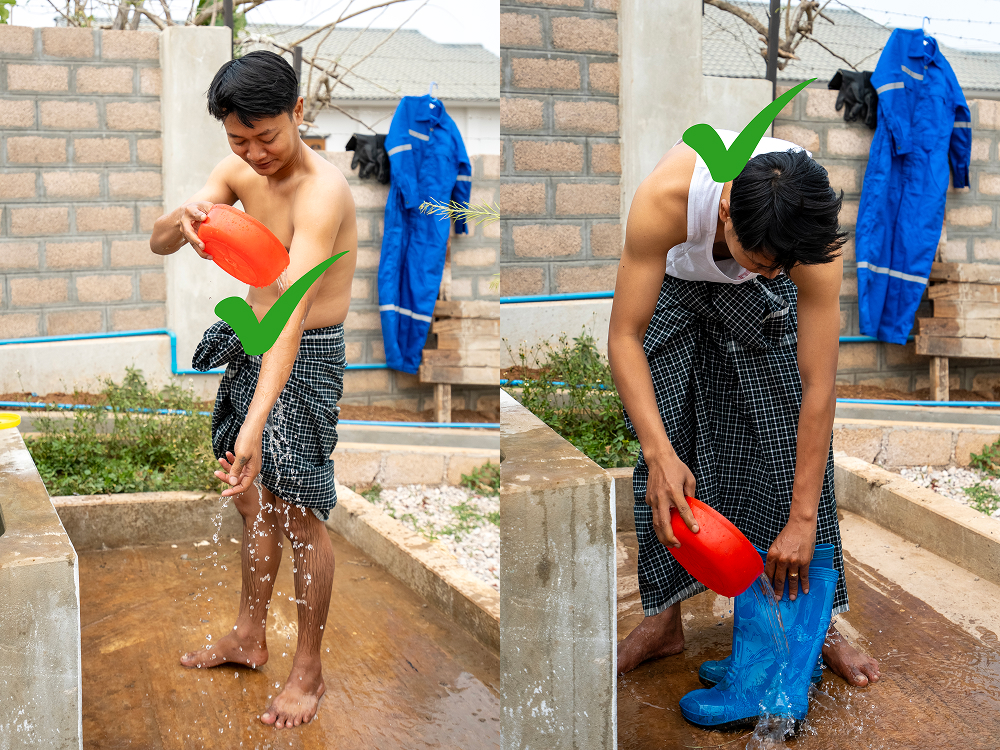
16. Wash protective clothing after each day’s use.
 Three major problems that can occur if pesticides are used at higher than recommended rates:
1. Pests can develop resistance to pesticides. Resistant pests are difficult to control. In addition, spraying requires more pesticide than previously used, which increases pesticide costs.
2. Over-spraying pesticides can leave more residue on crops, which can be harmful to consumers and can also result in loss of export opportunities.
3. By spraying more than the recommended dosage, common pests that attack crops become major pests. Having to control these pests again increases the cost of purchasing pesticides, spraying costs, etc., and can also be dangerous for the sprayer and cause environmental pollution.
Benefits of using legally registered medicine bottles/capsules1. With Myanmar language instructions, you can easily calculate the amount of pesticide to be used and mix it.
2. Easily know the pesticide to be used and the rate of pesticide to be used for the pests, diseases, weeds, etc. you want to control in your crops.
3. Easily know the expiration date of expired pesticides
4. There is a waiting period before harvesting the crops (PHI = Pre-Harvest Interval), so you can plan the date of spraying pesticides to avoid pesticide residues.
5. Since the address of the pesticide distribution company is included, if there is a major or minor issue related to pesticides, you can contact them, get information, and have the company’s responsibility and accountability.
Buying pesticides1. Purchase pesticides in securely sealed containers with the manufacturer’s logo.
2. Purchase pesticides that are compatible with the pest you are spraying.
3. Do not buy pesticides that do not have Myanmar labels or that have torn labels.
4. Purchase in the original packaging, bottle, or can.
Carrying pesticides1. Pesticides shall not be transported with food, people, or animals. They shall be transported separately.
2. Any iron, metal sheet, or wood protruding from the vehicle carrying the pesticide should be checked and removed before transport, as it may cause the pesticide containers to burst.
3. Pesticide containers shall not be thrown from a height. Pesticide containers shall be securely tied and placed no higher than the vehicle’s side rails.
4. Before bringing pesticides into the storage facility, inspect them for leaks, odors, and torn prescription labels, and repair or store them if necessary.